Designing For What Comes Next - Field Notes Issue 005
RK Collective on circularity as a question of time, not just materials. Why almost every brief asks who a product serves today, and almost none asks who inherits it in five years. On the 5R framework, NSW's 2026 battery stewardship scheme, and what regulation is actually telling design to price in.
Welcome back to Field Notes from RK Collective, a Sydney based product design studio helping our collaborators turn their impact ambitions into tangible products, systems and experiences; designed with the communities they are meant to serve, built on circular principles, and delivered from strategy to market.
Field Notes is our monthly dispatch, not a portfolio update or a pitch. Just an honest account of what we're making, reading, and wrestling with. If you'd rather not be here, no hard feelings, unsubscribe below. If you stay, we'll make it worth your while.
Most projects ask who the product serves today, But barely ask who inherits it tomorrow.
A client told us recently that we should be leading more assertively with circularity, especially with regulation in Europe catching up fast. It was meant as encouragement, and we took it as a prompt to actually work out what we would be claiming if we did.
Even Circular design mostly looks at human needs today. It rarely asks who inherits it tomorrow and what will it be like.
We have been building on what we wrote in Issue 004 about Recognition as the first move in any project, seeing the whole system, its components and its flows, before touching the brief. What we want to push further here is that recognition has a dimension that often gets overlooked, and that dimension is TIME
When we design, the question is always around what this product needs to do today, what are the needs today or who is it serving today, but rarely ask who inherits the decision in five or ten years, once the warranty has expired and the manufacturer has moved on to the next model. A material choice made this year has a say in a landfill, a repair economy, or a resale market that does not exist yet. That is not a future problem. It is a present decision with a credit that is borrowed from the future. ( By the way have you heard of Earth Overshoot Day?)
Looking at the Circular Economy 5R Framework
Even with good intentions, circularity has been an easy way for organisations to keep saying yes to making more, just dressed better. Refuse is the R nobody in this industry wants to talk about, because refusing to make something isn't a service any studio gets paid to deliver, Including ours.
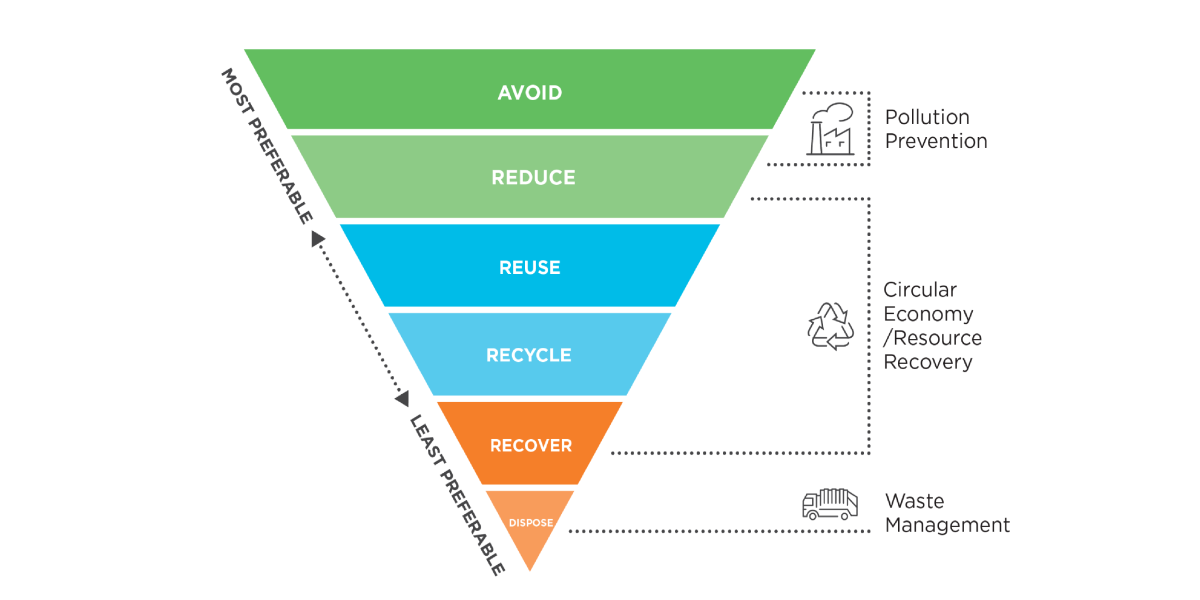
Most circular interventions start at the bottom of that hierarchy. Recycling is visible, it can be measured within a quarter, and it never requires telling a client to make less or charge more for something built to last. Refuse, Reduce, Reuse, and Repair don't work on that timescale. Their value shows up over years, sometimes after a product has already changed hands more than once, and most businesses commissioning circular design are still built to report on a three-month cycle. That mismatch, not a lack of good materials, is the actual blocker.
Recycling is the last resort but is too often used as the whole strategy: 'make lots of stuff, but make it recyclable'. To implement Circularity, We need to design for what can be inherited, in distant future, and that needs to stand against the test of time.
We see this constantly with founders who genuinely want to build a circular business model, not just a product made from recycled plastic. Take an electronics product as an example, Repairable design costs more to produce upfront, and that cost only pays for itself once the business model shifts, from selling one unit outright to renting, repairing, remanufacturing, or reselling it several times over. That shift is the actual work of circularity, and it takes time. Better materials are the easy part.
What regulation is actually telling us
Government is having the same argument at a larger scale. Rose Read and John Gertsakis, writing for the Product Stewardship Centre of Excellence, recently described Australia's circular economy policy as stalled, held back by reactive politics and a persistent unwillingness to price the true cost of doing nothing, producing what they call band-aid solution upon band-aid solution.
Where regulation is moving, it is moving toward evidence over intention. The EU Right to Repair Directive now requires manufacturers to stock spare parts and stop using software that blocks repair. NSW's Product Lifecycle Responsibility Act goes further: from 1 October 2026, brand owners selling batteries into NSW will be required to join an approved product stewardship scheme, taking responsibility for that product's entire lifecycle rather than handing the cost of disposal to councils and consumers. Batteries first. Other product categories are expected to follow the same model. Claims of circularity increasingly have to survive scrutiny years after the sale, not just at launch.
The cost we've been deferring
Things are cheap because we have been borrowing time from the future. The true cost of a product was never fully in its price tag. It lives in the soil that absorbs what nobody planned for, and in the electronic waste nobody priced in. Holding all of that across a project, from ideation through manufacturing through end of life, without collapsing it into a simple brief, is a rare capability.
We are still building it ourselves, one project at a time, and would rather say that plainly than claim we have already solved it.
A Moment in the Studio
One of our collective members, Jai Kalra, released a self-initiated project last week which really inspired us, especially to consider the dynamic nature of design as it ages. He rebuilt the Australian Marine Conservation Society's identity around Australia's five major ocean currents instead of the usual whale, turtle, and blue palette most marine conservation branding reaches for.
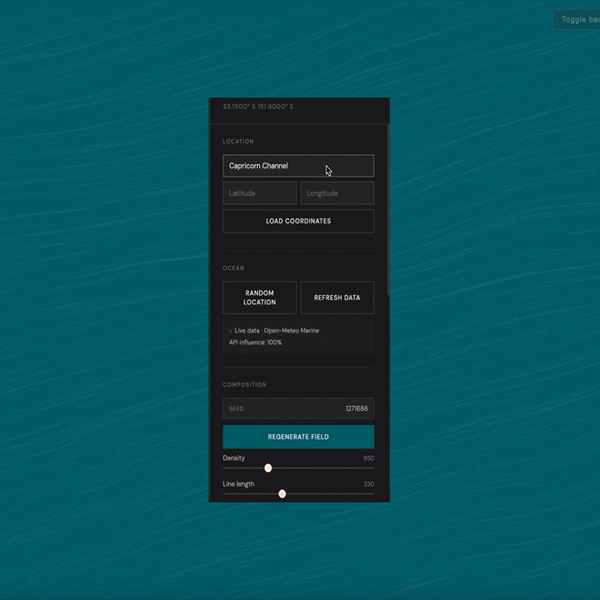

The system he built is not static, It changes as the currents change, with a generative tool that visualises live ocean data in real time. A brand system that recognises time as part of the design, not an afterthought to it. We couldn't have asked for a better illustration of this issue's argument, and we didn't write it, he did. Read about it here
On other exciting notes, we completed a photoshoot with Debbie Gallulo and an interview with Lara Chapman for Disegno Journal's 42nd issue, themed Transformation and launching during London Design Week this September. More details as the issue nears.
In Other News
The Design Institute of Australia has launched Write DESIGNER, a campaign asking every designer in the country to identify their profession on the 11 August Census. One of the most important advocacy campaigns for Australian design this year. Please watch the beautiful video and familiarise yourself with what’s needed from all designers!
Write DESIGNER produced by Clemenger BBDO, with spoken word by N’fa Jones and an original score by Jonah Gabriel
Nila is keynoting at UX Australia in Sydney on 27 and 28 August, speaking on what does designing vibrant communities requires of us as practitioners. Readers of Field Notes can take $100 off registration with code NIUXAUSTRALIA26, or use this link

If you are trying to work out whether your product's circularity claims would survive scrutiny of time, not just today, that is exactly where we start. Write to us: nila@rk-collective.com and christopher@rk-collective.com
Nila & Chris at RK Collective,
Located in Sydney, working internationally
rk-collective.com